Our Services
Development Approvals
These services are typically required for new development applications where a consent authority is required to consider whether land is contaminated to comply with State Environmental Planning Policy (Resilience and Hazards) 2021 and the Environmental Planning and Assessment Act 1979. All reports are prepared with consideration to statutory guidelines made or approved by NSW EPA under section 105 of the Contaminated Land Management Act 1997.

Preliminary Site Investigation
A Preliminary Site Investigation (PSI), also known as a Phase 1 environmental assessment, is the first step in the assessment process. The PSI aims to identify potential land contamination issues through desktop searches, regulatory databases and a site inspection. The PSI determines whether a site presents a low risk of contamination or if investigation is required.

Detailed Site Investigation
A Detailed Site Investigation (DSI), also known as a Phase 2 environmental assessment, builds upon the site history established during the PSI. The DSI involves the collection of soil, groundwater and/or vapour samples and compares results to established industry guidelines.
The DSI determines if a site is suitable for the proposed land use or if remediation is required.

Remedial Action Plan
A Remedial Action Plan (RAP) is required if land is contaminated. A development application can be approved if a consent authority is satisfied the land will be remediated prior to the site being used for its intended purpose.
The RAP identifies the contamination posing a risk to human health or the environment, defines the extent of remediation required and assesses available remediation options or suitable technologies.

Validation Report
A Validation Report documents the remediation works undertaken to demonstrate compliance with the remedial action plan and applicable regulatory requirements.
When required, the validation report is usually a condition of development consent prior to occupation of the building or prior to a construction certificate being issued.

Long Term Environmental Management Plan
A Long-Term Environmental Management plan is required when contamination is retained on site as part of the remediation strategy. These situations arise when it is not feasible to remove deep fill or to continue treating groundwater indefinitely. The Long-Term EMP relies on the contamination being effectively contained and documents procedures for managing future works which may disturb contamination.

State Significant Projects
State Significant Developments (SSD) and State Significant Infrastructure (SSI) defined by the Environmental Planning and Assessment Act 1979 follow the assessment process prescribed by SEPP (Resilience and Hazards) 2021. This includes projects seeking the streamlined approval pathway administered by the Housing Delivery Authority (HDA). The scope for these assessments are tailored to address the Secretary's Environmental Assessment Requirements (SEARs) for the project.
Advisory Services
These services are intended for property investors, acquisition managers, commercial real estate, financial and legal professionals. The scopes are tailored for commercial needs while the fundamental methods of assessment remain.

Environmental Due Diligence
An Environmental Due Diligence review identifies contamination risks for purchasers. The review uses desktop searches, regulatory databases and previous environmental reports to identify contamination risks which have potential to negatively affect property value or prevent future development. Cost estimates for managing contaminated land are populated within the Capital Expenditure (CAPEX) forecast and Repairs and Maintenance (R&M) schedule to inform the property transaction.

Environmental Assessments
An Environmental Assessment uses the same methodologies as a detailed site investigation (see above), except the scope is tailor for commercial purposes and delivery is expedited to meet timelines for due diligence or lease conditions.
A Targeted Environmental Assessment addresses data gaps identified in the due diligence review prior to purchase or sale of a property.
A Baseline Environmental Assessment establishes the condition of a site when a tenant commences and vacates a lease.

Expert Witness
An Expert Witness Report is a formal, independent opinion prepared by a qualified expert to assist the Court on technical or specialised matters beyond ordinary knowledge (such as contaminated land, asbestos in soils or waste management). Our expert witness services:
Provide independent, impartial, and objective expert opinion.
Address specific questions in dispute in the proceedings.
Explain technical issues in a manner the Court can understand.
Comply with the Expert Witness Code of Conduct.
Construction
These services are most relevant to civil contractors, developers and project managers. Keep your project moving and understand your risks upfront. Experience the benefits of managing waste effectively and maximising recycling opportunities.
Acid Sulfate Soils
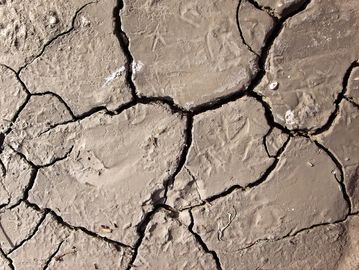
Acid sulfate soils are naturally occurring sediments containing iron sulfides (mainly pyrite) that were formed during the Holocene geological epoch, covering the past 10,000 years.
These sediments are harmless is left undisturbed but require management when excavated or exposed to oxygen.
An assessment is required when a a site is within a classed area. Soil testing of acidity, potential sulfuric acidity and neutralisation capacity determines whether a management plan is required.

Waste Classification
A waste classification is required before surplus soil is removed from site in order to comply with the Protection of the Environment Operations (Waste) Regulation 2014 and POEO Act 1997.
Understanding the origins and history of the waste to support a sampling program will result in an accurate classification of the waste.
All services will be performed in accordance with NSW EPA Waste Classification Guidelines and Sampling Design Guidelines.

Resource Recovery
Excavated Natural Material (ENM) and Virgin Excavated Natural Material (VENM) are important definitions when managing disposal of non-contaminated soil or rock.
Substantial cost savings can be achieved by beneficially reusing or recycling ENM/VENM opposed to disposing of surplus spoil to landfill.
Both the producer and consumer of an exempt waste are required to comply with the conditions of a resource recovery order.